Public NIC statements on Australia’s threat environment

Recently, three agency heads within Australia’s national intelligence community (NIC) had made public statements on Australia’s threat environment, all highlighting the interplay between international events and local security challenges.

  • Andrew Shearer, Director-General of the Office of National Intelligence, delivered a statement to Senate Estimates on 7 October 2025.
  • The new Australian Federal Police Commissioner Krissy Barrett addressed the National Press Club on 29 October 2025.
  • Commissioner Barrett also delivered testimony to Senate Estimates on 8 October 2025 and you can read the resulting discussion from page 177 onwards here.
  • Michael Burgess, Director-General of the Australian Security Intelligence Organisation, delivered a lecture to the Lowy Institute for International Policy on 4 November 2025.

Regular readers of this blog may know that I tend to have favourable views of Australia’s intelligence services, albeit with some reservations, so it won’t be a surprise that I think these statements are well-founded. It is particularly pleasing to see open discussion about ways that inter-state strategic competition can influence violent extremism within Australia, as I’ve previously argued that Australia’s national security conversation failed to fully acknowledge that relationship (see my 2022 ASPI chapter “What strategic competition means for counterterrorism“).

It is similarly pleasing to see more discussion about transnational repression, which I’d previously contended should be seen as the most serious form of foreign interference experienced in Australia:

The dangers of foreign interference are most apparent when it involves transnational repression (authoritarian regimes operating across borders to coerce, blackmail, harass, intimidate, threaten, assault, kidnap, torture or murder dissidents). This is the most visceral form of foreign interference, far removed from the grey zone where there can be reasonable debate about what distinguishes legitimate influence from illegitimate interference (something Justice Hope had to wrestle with in his second Royal Commission into Australia’s intelligence agencies).

Yet until relatively recently, transnational repression (and the crossover with terrorism) did not feature heavily in Australia’s political discussions over foreign interference, despite events like the Russia’s poisoning of Skripal in the UK, Saudi Arabia’s murder of Jamal Khashoggi or Iran’s assassination and kidnapping plots in multiple countries.

At the same time some aspects of these NIC statements make me apprehensive, particularly the parts about youth involvement in violent extremism. It is certainly a real problem, but I worry deeply that some elements of the response (such as the 2023 criminalisation of possessing violent extremist material) will themselves cause great harm. It is truly vexed because children are indeed being targeted by some of the most reprehensible networks imaginable like 764.

There’s a lot more to dig into in these statements, but I’ll just share some academic and grey literature on a few of the topics raised.

The sources all provide detailed information on international examples of threats mentioned in the above statements by NIC leaders, which can be drawn on to understand how these threats can manifest in Australia:

Henry Farrell on artificial intelligence as governance

Henry Farrell has a new article in the Annual Review of Political Science, and I cannot recommend it highly enough. The central idea is that:

Political scientists might engage AI by investigating its relationship to governance. How does AI affect existing forms of governance, such as markets, bureaucratic hierarchy, and democracy? Is AI itself a kind of governance?

However, governance too is a vexed term (Mayntz 2009). As Peters (2012, p. 19) tartly remarks, “the ambiguity of the concept…has been one of the reasons for its popularity.…It…obfuscates meaning at the same time that it perhaps enhances understanding.” Peters, however, notes that despite its variety of meanings, the word governance originally referred to steering a boat, like cybernetics (derived from the Attic Greek word for “steersmanship”). Governance, along with cybernetics and control (Beniger 1986Wiener 2019Yates 1993), is a catchall phrase for forms of social, political, and economic coordination that especially emphasize information processing.

Stealing from broadly analogous ideas presented by Simon [2019 (1968)], I treat governance as an umbrella term for the large-scale systems for processing information and social coordination that allow complex societies to work. A system of governance, then, has (a) an input, some large-scale source of complex information; (b) a technology for turning that information into useful, albeit lossy representations that can more readily be manipulated; and (c) outputs that can be used to coordinate on the basis of those representations.

In markets, the price mechanism summarizes tacit knowledge (Polanyi 1966) about relations of production, allowing widespread economic coordination (Hayek 1945Lindblom 2002). In bureaucratic hierarchy, authority relations and classification systems turn diffuse social knowledge into tractable information that can enable government rulemaking (Scott 1998Weber 1968). In democracy, mechanisms for representation and voice turn the desires and knowledge of citizens into tractable representations that enable feedback and control over their collective circumstances (Allen 2023Dewey 1927).

These systems of governance are at best highly imperfect. The price mechanism, bureaucratic categories, and representations of the democratic public are “simulations” [Simon 2019 (1968)] or very lossy coarse-grainings (Flack 2017) of irreducibly complex underlying realities. But even harsh critics (Scott 1998) acknowledge that modern large-scale societies would be impossible without them.

They are deeply entangled with one another. Markets depend both on the external institutions of government (North 1990) and on the internal bureaucratic hierarchy of the firm (Coase 1937). Bureaucracies draw on markets and have regularly sought to import their logic (Dunleavy & Hood 1994). Democracy depends on bureaucratic hierarchy to implement decisions and, as Lindblom (2002) observes, seems practically conjoined to the market economy.

The value of this approach to governance is not that it provides precise definitions, let alone testable hypotheses, but rather broad heuristics. We can see how AI may not be a putative substitute for individual human intelligence but instead a means of collective information processing and coordination. Specifically, we can consider AI either (a) as an external technology, affecting how existing systems of governance coordinate and process information, or (b) as a possible form of governance in its own right, with its own particular form of coordination and information processing. How does AI affect the internal workings of existing forms of governance? Might it become its own form of governance, with associated pitfalls and possibilities (Farrell & Shalizi 2023)? These two broad questions motivate different but partially overlapping research agendas.

I strongly recommend reading the entire article (which will likely remain open access until the next edition of the Annual Review of Political Science comes out). It is a great example of scholarly engagement with the anxieties of our era.

My own field, where we focus a lot on how technological transformations reshape terrorist tactics and extremist politics, can only be strengthened by deep engagement with how these technologies may similarly reshape societal structures and mainstream politics.

Research and commentary update

As I haven’t posted here in a while, this is a quick update about some recent research contributions and commentary.

Research on terrorism in transnational mobilisation

On 15 September 2024 I had an article published in Studies in Conflict & Terrorism, called “The Smallest Act You Do in Their Lands is More Beloved to Us than the Biggest Act Done Here”: When Do an Armed Movement’s Transnational Supporters Turn to Terrorism at Home?

What explains whether someone who supports an armed movement in a foreign war turns to plotting a terrorist attack at home? Using data on 129 Australian supporters of Islamic State, this paper examines the impact of contextual and dynamic factors relating to strategic logic, mobilising structures and security measures. It finds that the strategic priority Islamic State publicly placed on transnational terrorism at a given time was most important, followed by whether the supporter was subjected to travel restrictions and law enforcement interactions, only then followed by micro-level factors traditionally focused on in quantitative studies of individual involvement in terrorism.

This is the first journal article to come out of my PhD, and there will be more ahead. I’m particularly keen to build on this approach to addressing the specificity puzzle in terrorism studies (the puzzle of what differentiates the extremely small number of people who engage in terrorism from the much larger number of people, affected by the same presumed factors, who do not engage in terrorism) by incorporating factors relating to strategic logic, mobilising structures and security measures. I explain this here:

When quantitative studies of individual involvement in terrorism do address higher level factors, they tend to be of a limited range. Often, the main meso-level factors addressed involve social relations (such as whether the individual had extremist peers or an extremist family) and the main macro-level factors involve socio-economics (such as the individual’s education or employment level, which can serve as a proxy for structural disadvantage). These factors have immense value, as they speak to questions of social psychology, social identity and social structure, the importance of which is recognised throughout the field. They highlight issues like the role that social exclusion can play in terrorism, and show that the rise of the concept of radicalisation has not necessarily come at the expense of research on root causes. However, these factors also have limits. They tend to be static rather than dynamic, encompassing social positions rather than political processes. There are other meso-level and macro-level factors equally worthy of inquiry, that result not from the structure of the social order but from the contingencies of political mobilisations, and which reflect the contentious interactions between many different types of political actors that are routinely part of the context in which terrorism occurs.

Terrorism, the “intentional threat or use of force by a nonstate actor to evoke fear in a population to affect a political outcome”, is a tactic used in political mobilisations. These mobilisations necessarily involve actors beyond individuals (such as networks, groups and organisations) and a broader political context. This applies whether the political mobilisation involves a broadly non-violent social movement where terrorism develops only at the fringes, or an armed movement in a civil war whose leadership embraces terrorist tactics. This is not a novel point, as the importance of understanding terrorism as one tactic among many in a broader political mobilisation is emphasised throughout influential works in terrorism studies. This includes many multi-level qualitative studies such as Clark McCauley and Sophia Moskalenko’s work on mechanisms of radicalisation, the social movement theory approaches of Thomas Hegghammer and others drawing on the pioneering work of Donatella Della Porta, or the foundational contributions to terrorism studies by scholars like Martha Crenshaw. Nonetheless, quantitative studies of individual involvement in terrorism have not tended to explicitly examine some key factors reflecting the political role of terrorism, with important exceptions that show the value of overcoming the earlier neglect of such factors. This is particularly evident in the case of three sets of factors: strategic logic, mobilising structures and security measures.

Greater pragmatism under al-Qaeda’s post-Zawahiri leadership?

More recently, on 17 February 2025, I had a post published at Jihadology called, Making sense of alleged AQAP-Houthi cooperation: local pragmatism or further accommodation between al-Qaeda and Iran?

The latest report by the United Nations Analytical Support and Monitoring Team reiterated allegations that al-Qaeda in the Arabian Peninsula (AQAP) is cooperating with the Iran-backed Houthi rebels in Yemen. Is this alleged cooperation likely to have resulted from the local dynamics of the Yemeni conflict, or does it reflect a broader accommodation between al-Qaeda and Iran?

I greatly enjoyed writing this post, particularly because it moved beyond the Australia-centred focus of much of my writing. I was motivated by a glaring gap in current commentary; there had been a fair bit of discussion about recent reports of AQAP-Houthi cooperation, but I couldn’t find any analysis placing this in the context of what we knew about the contentious (but not always hostile) relationship between AQAP’s parent organisation and the Houthis’ main state supporter (particularly given that al-Qaeda’s likely leader is based in Iran). So, I sought to make some sense of it myself and write this explainer.

I didn’t offer definitive answers (hence the question marks in the title and introduction), seeking to make it more of an analytical piece than an opinion piece. This was not a topic that I had conducted my own primary research on, so I instead built on the work of Yemen experts and scholars of jihadism who frequently translate Arabic language primary material, then brought in my own knowledge from political science and terrorism studies. I’m quite happy with the result and aim to write more short pieces like this.

60 Minutes on Operation Silves

I also provided some background material for 60 Minutes’ story on the 2017 Sydney plane plot, which aired on 23 February 2025. In the episode they interview one of the plotters (Tarek Khayat) as well as the patsy (Amer Khayat), along with terrorism scholar Levi West and others. For more detail on the plot, see my CTC Sentinel article from April 2020: Operation Silves: inside the 2017 Islamic State Sydney plane plot:

Nearly three years ago, Australian counterterrorism investigators arrested two men in Sydney who had plotted, under instructions from Islamic State operatives in Syria, to bomb an international flight and create a chemical weapon. It remains one of the most innovative of the Islamic State’s external operations and the most ambitious jihadi plot that Australia has faced. Newly available information resulting from the successful prosecution of the Sydney-based plotters reveals how the plot developed, shedding light on the evolution of the Islamic State’s external operations. The Syria-based Islamic State operatives possessed several advantages that, combined with their approach to providing logistical support, allowed them to bring the plot close to completion. Fortunately, the plotters failed to overcome the inherent difficulties involved in long-distance terrorist plots and were impeded by years of investment in airport security, international intelligence cooperation, and counterterrorism capabilities.

Renewed calls for repatriation

I recently offered some comments for Henry Belot’s Guardian article on 24 February 2025, Australia should repatriate and investigate alleged crimes of Islamic state member found in Syria, experts say.

My views on this topic (I comment on the general situation, not specific individuals) are the same now as they were in 2019, because the situation remains the same. There are no doubt dangers involved in bringing some of these people back to Australia, but there are also dangers in leaving them in Syria, particularly with the situation getting more uncertain over there. For example, there have been cases when captured Islamic State members have escaped through mass breakouts or been handed over in prisoner swaps. There have also been cases where Australian Islamic State members abroad have instigated terrorist plots in Australia. So the idea that the best way to protect Australia is to keep all potential threats outside of Australia doesn’t always work.

Then there are the human rights problems posed by leaving these Australians in Syria. It’s obviously hard to imagine anyone joining Islamic State for innocent reasons, but they still have the right to due process and the best chance for that is in Australian courts. So, while there are no easy options, in my view the best policy approach is to repatriate as many of these suspected Islamic State members and their families as possible, and where appropriate prosecute as many as possible or apply other measures like Control Orders. Given the fall of Assad and the uncertainty facing the Kurdish-led Syrian Democratic Forces (who hold almost all the detainees) I suspect this problem will regain prominence.

On this, I recommend this new Just Security article arguing that the new situation in Syria strengthens the case for repatriation of Islamic State affiliated detainees: In a new era for Syria, states must take responsibility for their Islamic State-affiliated prisoners and families.

CoVE in Congress

Finally, on Wednesday (or Tuesday Washington time), some research I contributed to through Valens Global (along with Daveed Gartenstein-Ross, Emelie Chace-Donahue and Madison Urban), on what we term Composite Violent Extremism (CoVE), was discussed at a hearing of the US Congressional Subcommittee on Counterterrorism and Intelligence.

You can watch the hearing, or read Daveed Gartenstein-Ross’s witness statement, or read our Studies in Conflict & Terrorism article from March 2023: Composite violent extremism: conceptualizing attackers who increasingly challenge traditional categories of terrorism:

Scholars and counterterrorism practitioners have expressed increasing concern over violent extremists who display an amalgamation of disparate beliefs, interests, and grievances. Despite a proliferation of labels like “salad bar extremism,” consensus on the nature of the problem is lacking and current understandings risk conflating what are in fact distinct types of extremism. Building on current literature and a detailed dataset, this article presents a new conceptual framework for understanding this phenomenon, consisting of an overarching concept of composite violent extremism (CoVE) and underlying typologies of ambiguous, mixed, fused, and convergent violent extremism. The article then proposes explanations for the apparent increase in these radicalization patterns.

Definitions of strategy and the political-military interface

Hew Strachan has often argued that the field of strategic studies tends to use the term “strategy” quite differently to how Carl von Clausewitz did. Strachan’s argument is that in Clausewitz’s time “strategy” was concerned with the art of winning a war, whereas today “strategy” is often concerned with whether a war should be waged and to what end.

Strachan argues that this “distinction – strategy as the use of the battle for the purposes of war and strategy as the use of war for the purposes of policy – has become muddled” as the term “strategy” moved from the domain of military commanders to political leaders. In other words, current uses of the term “strategy” often encompass a higher level of the political-military interface than Clausewitz himself ever did, despite the Prussian’s popularity in the field.

To be clear, Strachan does not argue that political leaders in the 19th century and earlier did not strategise as to how their decisions to wage war could serve political goals, just that they did not use the term “strategy” in this way (consistent with accounts by Lawrence Freedman and others).

Strachan adds that qualifying terms, such as “military strategy” and “grand strategy”, mark important distinctions but do not sufficiently overcome this muddle because these terms now have many meanings themselves.

Some years ago, Jeffrey Meiser made a similar point on Twitter, noting that some definitions of “military strategy” emphasised winning a war while others emphasised using the military to achieve a political goal. Several responses to his tweet expressed strong disagreement, arguing that there was no real difference, but by my reading of various definitions he was right. The objectors were imposing assumptions that were not explicit in many definitions of military strategy, and that would not account for ways that military force can achieve political goals short of waging war (such as deterrence and compellence) despite this being a major focus of the field since the 1950s.

So, there is often a need to clarify the assumptions behind different uses of the term strategy, because definitional debates with strategic studies can be no less contentious than definitional debates within terrorism studies. While many in strategic studies would agree that strategy concerns both political leaders and the military commanders below them, different definitions imply different political-military dynamics and divisions of responsibility.

For example:

  • Is strategy concerned with winning a war (implying that it is primarily the responsibility of military commanders, though accepting that political leaders have ultimate authority)?
  • Or is strategy concerned with decisions about whether to wage war (implying that it is primarily the responsibility of political leaders, though with expert input from military commanders)?
  • Or is strategy concerned with the interactions that both political leaders and military commanders have with many other parts of government (implying that military commanders should not necessarily have greater input than any other part of the public bureaucracy)?

Broader definitions of strategy can implicitly invoke higher layers of the political-military interface and thereby mean quite different things (and have different implications for civil-military relations) in ways that are not always acknowledged.

For example, in one article Richard Betts defined strategy “a plan for using military means to achieve political ends, or as Clausewitz put it, ‘the use of engagements for the object of the war.’” Yet what Betts proposed in the first half of the sentence, “a plan for using military means to achieve political ends”, is broader than the definition from Clausewitz he quotes in the second half and implies a greater role for political leaders. Political decisions about whether to threaten war or initiate a war would fit under Betts’ definition, “a plan for using military means to achieve political ends”, but not under the Clausewitz quote that Betts’ presented as equivalent to his own definition.

It could be argued that because Clausewitz’s conception of war centred on political purposes, his definition of strategy implicitly encompassed today’s broader definitions, but that would be a stretch. As Hew Strachan argued, that might be how people read Clausewitz today, but it is not how people read him in the 19th century.

To help anyone working through different definitions of strategy, the table below divides common based on their embedded assumptions that implicitly invoke different layers of the political-military interface. I first made it some years ago for my own interest in disentangling some of the strategic studies literature but have enjoyed revisiting it as I work my way through The New Makers of Modern Strategy.

The table centres on two core distinctions:

  • The first distinction is the type of power involved. This is the distinction between military strategy (concerned with the use of military power) and grand strategy (concerned with the use of all elements of national power).
  • The second distinction is the scope of the ends sought. This is the distinction between whether the term strategy is concerned with narrower ends (winning a war) or broader ends (the purposes for which a war might be fought or for which all elements of national power, including military power, might be mobilised).

It could be argued that this last distinction is false, and that the idea of winning a war is inseparable from achieving the intended political ends of a war. However, as shown in the argument above and the table below, this relationship is not explicit in all definitions of strategy.

On the military strategy side (the first two rows), there is also some synergy between this approach to dividing definitions and Lukas Milevski’s argument that Western definitions of military strategy invoke several different logics. Milevski argues that some definitions invoke an adversarial logic of overcoming an enemy (pointing to the concept of operational art and more contentiously the concept of an operational level of war) while other definitions invoke an instrumental logic of achieving a political end (pointing to the popular ends-ways-means model).

The former logic is apparent in the table’s first row, the narrow conception of military strategy, while the latter logic is apparent in the second row, the broader conception of military strategy. However, this argument does not apply to definitions of grand strategy, as even the narrower definitions explicitly state the importance of a political end (and Milevski’s article does not claim to address grand strategy, as he has done that elsewhere).

Milevski’s argument, in the same article, about the distinction between “decision making” and “performance” are also not addressed by this table, which is concerned with common strategic studies definitions of strategy rather than the game theoretic definitions which Milevski addressed under the rubric of “decision making”.

The table does not address the many definitions of strategy outside the political-military concerns of strategic studies, such as business strategy. The aim is to help people interested in strategic studies to make sense of the many definitions floating about in the field and choose those appropriate to the dimensions of the political-military interface that they are interested in.

Military strategy, narrower conception
Concerned with the use of military actions to win a war (implicitly adversarial logic, overcoming an enemy)

Examples:

  • “the art of the general” – common translation of Greek term “strategos”.

  • “the use of the engagement for the purpose of the war”Carl von Clausewitz.

  • “The purpose of tactics is to win battles. The purpose of strategy is to win wars.”David T. Zabecki.

Military strategy, broader conception
Concerned with the use or threat of war to achieve policy goals (implicitly instrumental logic, achieving a political end)  

Examples:

  • a plan for using military means to achieve political ends”Richard Betts.

  • “the bridge that relates military power to political purpose”Colin Gray.

  • “the use that is made of force and the threat of force for the ends of policy”Colin Gray again.

  • “the art of distributing and applying military means to fulfill the ends of policy”Basil Liddell Hart.

  • “Military strategy can no longer be thought of, as it could for some countries in some eras, as the science of military victory. It is now equally, if not more, the art of coercion, of intimidation and deterrence. The instruments of war are more punitive and acquisitive. Military strategy, whether we like or not, has become the diplomacy of violence.”Thomas Schelling. 

Grand strategy, narrower conception
Concerned with the use of all elements of national power to win a war (implicitly a major or global war, not a “limited war”).  

Examples:

  • “the mobilisation and deployment of national resources of wealth, manpower and industrial capacity, together with the enlistment of those of allied and, when feasible, neutral powers, for the purpose of achieving the goals of national policy in wartime”Michael Howard.

  • “to co-ordinate and direct all the resources of a nation, or band of nations, toward the attainment of the political object of the war.”Basil Liddell Hart.  

Grand strategy, broader conception
Concerned with the use of all elements of national power to achieve policy goals beyond military victory (implicitly global or similarly ambitious goals, such as maintaining a favourable international order, rather than less “grand” goals)  

Examples:

  • “the art of the statesman” – common phrase, in this case taken from C.R. Smith.

  • “the capacity of the nation’s leaders to bring together all of the elements, both military and nonmilitary, for the preservation and enhancement of the nation’s long-term (that is, in wartime and peacetime) best interests.”Paul Kennedy.

  • “the conceptual framework that helps nations determine where they want to go and how they ought to get there; it is the theory, or logic, that guides leaders seeking security in a complex and insecure world.”Hal Brands.

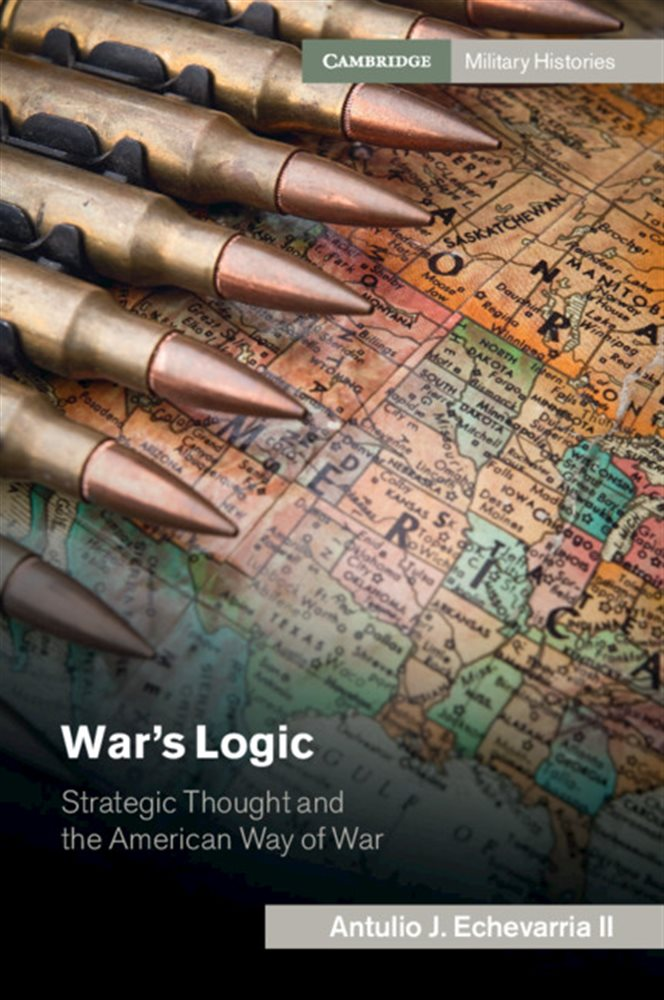
Review of Antulio J Echevarria II’s War’s Logic: Strategic Thought and the American Way of War

Last November the Australian Journal of Defence and Strategic Studies published a review I wrote of Antulio J Echevarria II’s excellent book War’s Logic: Strategic Thought and the American Way of War.

However, the review can be quite hard to find as the journal does not link to each article individually, only to the PDF of the entire edition. As the journal is published under a Creative Commons Attribution 4.0 license, I have created a separate PDF of the review itself to make it more accessible.

You can access the review here or read the beginning of it below.

The American way of war has always mattered greatly for Australia. Decisions made in the United States over when, and how, to wage war have long influenced Australia’s military fortunes. The American way of war has in turn depended on how American strategic thinkers have understood the logic of war, which has itself evolved over time in response to global politics, technological developments, intellectual trends and changes in American society. Antulio Echevarria’s new book, War’s Logic: Strategic Thought and the American Way of War, guides us through this tumultuous intellectual history. The book’s value lies both in what it reveals about American military thought and what it reveals about the logic of war itself.

War’s Logic explains the ideas of 12 American strategic thinkers from the late nineteenth century to the end of the twentieth century, who he divides into four groups.

First are the traditionalists, Alfred Thayer Mahan and Billy Mitchell, both military veterans and tireless enthusiasts of sea power and air power, respectively. Despite the different eras they wrote in, with Mahan 39-years older, they both brought Swiss theorist Antione Jomini’s core principles, prioritising offensive action, into their own military domains.

The second group are the civilian strategy intellectuals, Bernard Brodie, Robert Osgood, Thomas Schelling and Herman Khan. They gained prominence after the Second World War and prioritised the need to avoid a third world war given the transformative impact of nuclear weapons. New understandings of war’s logic followed: Brodie and Osgood’s promotion of limited war; Schelling’s view of war as bargaining and strategy as coercion (deterrence and compellence); Kahn’s advocacy of a nuclear escalation ladder that could itself function as a form of bargaining. Yet the apparent failure of limited war doctrine in Vietnam, along with the easing of Cold War tensions in the 1970s, reduced the influence of the civilian strategists.

This prompted the rise of Echevarria’s third group, the military intellectuals, Henry Eccles, J C Wylie, and Harry Summers. While the strategy intellectuals had been concerned with how to prevent military escalation (despite coercively wielding the threat of war for the purpose of bargaining), the military intellectuals restored space to focus on how to conduct war for the purpose of winning. Both Eccles and Wylie advanced the idea of strategy as control, an approach that Echevarria credits with synthesising both the traditionalist emphasis on offensive action with the civilian strategist emphasis on constraining military action to ensure it serves the purposes of policy. All three thinkers, particularly Summers, played a role in the post-Vietnam Clausewitz revival within the United States military.

The final group are the operational artists, John Boyd, William Lind and John Warden. These thinkers gained prominence in the 1980s and 1990s, when the idea that nuclear weapons made conventional war obsolete had lost its hold. Their priority was to create the intellectual foundations for the United States to once again wage war successfully. They restored the seemingly archaic idea of winning wars through winning battles, but with new twists. Boyd and Lind, respectively best known for the OODA Loop (observe, orient, decide and act) and Fourth Generation Warfare, sought to prioritise indirect attacks through the idea of manoeuvre warfare, where synchronised air and ground operations could use speed and surprise to overcome the need for grinding attrition. Warden promoted a different version of manoeuvre warfare based on air power, which paved the way for ideas such as effects-based operations. Like Eccles, Wylie and Summers, this group focused more on the conduct of war itself than th control of war through policy, but they went far further. In Echeverria’s account, Boyd, Lind and Warden’s ideas of prioritising operational art amounted to an intellectual insurrection.

This is the story that War’s Logic tells, and Echevarria is well suited to tell it. He is a professor at the US Army War College and brings both military and scholarly credentials to the formidable task of synthesising a nation’s strategic thought across a contentious century. …

If that sounds of interest, read the full review (about 4000 words including footnotes) here.

I should also mention that something went wrong with Footnote 30, and through some sort of Zotero accident I somehow pasted in a chunk of the blurb of the book I was citing. The footnote should simply say “Ben Mckelvey makes the argument that the US-led counter-network operations incentivised killing for its own sake and helped establish the context for the Australian war crimes.”

Australian intelligence agencies and policy influence: crossing a threshold?

I’m generally sceptical of claims that Australian intelligence agencies have gained undue influence over policy, such as when Paul Keating claimed that the “nutters” running the agencies were responsible for the deterioration in Australia-China relations.

I can remember when the left-leaning critique was the opposite. In the aftermath of the Iraq war, it was commonly argued that elected leaders (namely the Howard government) had neutered the intelligence services so much that their analytical findings were being distorted to serve policy ends. I still have some sympathy for that argument and wish the Flood report had engaged with it in more detail, as there remains a tendency for intelligence agencies to be blamed for decisions that are ultimately the responsibility of elected leaders.

However, two quotes from former insiders have recently led me to wonder if the argument that Australia’s intelligence agencies have gained greater influence are better founded than I first thought. The first quote comes from Peter Varghese, former Secretary of the Department of Foreign Affairs and Trade (DFAT) and former Director-General of the Office of National Assessments (ONA), who argued that “a threshold has been crossed”. He contended in 2022 that:

One decisive change in the Turnbull-Morrison period has been the rise in influence of the intelligence agencies. This coincides with a new agenda: the intensification of national security, China’s influence operations and sovereignty concerns. A threshold has been crossed with the intelligence agencies now having a direct policy impact in a way we have probably not seen before. These agencies have enjoyed vast expansions in their budgets, while DFAT has struggled. Within the system, national security is more important and diplomacy is less important. Follow the money – that reveals the changed priorities. DFAT has been cut because successive governments see no political cost in doing so. The foundation stone in Justice Hope’s review of the security services was the need to separate intelligence assessment from policymaking. But this is now being eroded.

The second quote comes from Chris Taylor, the head of the Statecraft & Intelligence Program at the Australian Strategic Policy Institute (ASPI). Taylor contended in 2024 that:

In recent years, the NIC [National Intelligence Community] has come under some criticism, including from within the bureaucracy, for being ‘too prominent’ in national-security policy development in Australia, being seen to transcend a traditional intelligence role and trespass on the role of policy departments. I would argue that this role for intelligence hasn’t been sought but has instead been foisted upon it— ironically because of policy advisers’ sometimes underdeveloped understanding of how to most effectively utilise intelligence for policy purposes (including through integration with other policy inputs). In those circumstances, ministers have unsurprisingly tended to go to the source instead and seek counsel from intelligence agencies on policy questions arising from intelligence insights.

Both quotes suggest that Australia’s intelligence agencies have indeed gained greater policy influence, at least since the Turnbull government. However, neither quote contends that this resulted from sinister maneuvering by the intelligence services, instead suggesting that it reflects who the Ministers decide to listen to and a diminishing of policy capabilities in the public service.

The Varghese quote notes that these changes (if they are indeed occurring) indicate a departure from the principles laid down in two Royal Commissions chaired by Justice Robert Marsden Hope during the 1970s and 1980s. Some years back, Peter Edwards (military historian and Hope’s biographer) wondered if the “Hope model” was being challenged by a “Pezzullo model”, referring to the then head of the Department of Home Affairs, Michael Pezzullo, and the placing of five domestically oriented NIC agencies in the Home Affairs portfolio.

The Albanese government’s removal of four NIC agencies from the Home Affairs portfolio shows that the “Pezzullo model” has not won the day. However, the quote from Varghese (implicitly supported by Taylor’s) supports Edwards’ concern about the “Hope model” being under challenge, perhaps because current political leaders see less value in it. It will be interesting to see how this evolves, and whether the issue is discussed in the latest Independent Intelligence Review.

Update 1: Updated the description of Peter Varghese’s former role, on 4 September 2024.

Resources: the distinction between violent extremism threat assessment and risk assessment

The Journal of Threat Assessment and Management has published a new systematic literature review of violent extremism threat and risk assessment tools, authored by Anna Clesle, Jonas Knäble, and Martin Rettenberger.

The main takeaway is that the Terrorist Radicalisation Assessment Protocol (TRAP-18) currently has a far stronger psychometric evidence base than any of the other eight tools examined, and that much more research is needed on these tools overall. The review also has a valuable table summarising the population of interest each tool can be applied to, the outcome the tool is intended to help practitioners prevent, and whether the tool is concerned with threat assessment or risk assessment.

However, this last point raises an issue. While the table notes the distinction between threat assessment and risk assessment, the review itself does not elaborate beyond this sentence:

Available information about the development process was collected, and instruments were categorized by the purpose of their application, that is, threat management as the prevention of imminent extremist violence and risk management to guide decision making in the context of treatment and rehabilitation…

For the purposes of the review, further elaboration may not be needed. However, for this post I want to share some resources that delve more deeply into the differences between threat assessment and risk assessment in this context.

The terms “threat” and “risk” are colloquially similar, but “threat assessment” and “risk assessment” are two different (albeit overlapping) fields of forensic practice, the former more operational and the latter more clinical. Threat assessment has a real-time (or very short term) focus, such as a police service or private security agency monitoring whether an individual appears to be preparing for an act of violence, while risk assessment has a longer-term focus, such as a psychologist inferring whether a prisoner awaiting parole is likely to reoffend at some point in the future.

Each field has its own professional associations, its own handbooks, and its own journals. In recent decades, both fields have been drawn on for counter-terrorism purposes, although counter-terrorism itself developed over many decades as a police, intelligence and military concern quite separately to either of these fields of forensic practice.

These fields have increasingly entered the counter-terrorism space, and consequently the academic field of terrorism studies has engaged with them more. However, there has been no shortage of controversy.

The “threat versus risk” question is merely one of many relevant conceptual questions, but quite a foundational one, given debates about whether long-term risk assessment is even feasible for violent extremist recidivism. The most forceful version of this argument contends that “while short-term ‘hot’ threat assessment of terrorism offenders is arguably possible with appropriate caveats, long-term ‘cold’ risk assessment of terrorists, as requested by Australian legislation, is clearly not.”

This view is not universally shared. Many would hold the same concerns about various tools and about Australia’s High Risk Terrorism Offenders legislation without concluding that violent extremism risk assessment is entirely impossible. Nonetheless, the argument highlights that it is precisely the long-term focus of risk assessment makes it so fraught. As Marc Sageman notes, it “is a bit like the weather: scientists are better at accurately predicting the weather the closer the prediction is to the event.”

So, the distinction between threat assessment and risk assessment matters. However, it is also far from straightforward. The difference between threat and risk already unclear when it comes to everyday language, but the growing literature on violent extremist threat and risk assessment can itself show inconsistencies.

For example, this article briefly discusses the difference between threat assessment and risk assessment but describes the Violent Extremism Risk Assessment (VERA) tool as a threat assessment tool, even though the name suggests risks assessment. Other studies describe VERA as a risk assessment tool but the Clesle et al. review’s table describes VERA as concerned with both threat and risk assessment. Similarly, this study of VERA briefly mentions the Terrorist Radicalisation Assessment Protocol (TRAP-18) and describes it as a risk assessment tool, but TRAP-18’s creator Reid Meloy emphatically describes it as a threat assessment tool and prominently advocates for distinguishing between threat assessment and risk assessment. Separately, Monica Lloyd describes TRAP-18 as a hybrid of both threat assessment and risk assessment, while the Scottish Risk Management authority’s inclusion of TRAP-18 in its list of sufficiently validated tools (the only terrorism-related tool they include) suggests that they are comfortable considering it under the rubric of risk assessment. This shows that at different times, VERA and Trap-18 have each been described as threat assessment tools, as risk assessment tools, or both.

Furthermore, this forthcoming Campbell systematic review covers mostly the same tools as the Clesle et al. review, but describes itself as a review of risk assessment tools while Clesle et al. describe their study as a review of threat and risk assessment tools. This all shows that even within these literatures, consensus on the demarcation between threat assessment and risk assessment is lacking.

The disagreements centre not only on how specific tools should be classified, but how these fields of forensic practice should relate to each other. For example, some accounts describe threat assessment as a type of risk assessment while others argue that “it is preferable to conceptualize threat assessment as its own genre to avoid confusing the two.” Reid Meloy takes a middle ground approach, arguing that threat assessment is distinct from risk assessment while noting that the differences are “primarily a matter of degree rather than kind” and that “the theory and research relevant to one can inform the other”.

My own view is in line with Meloy’s, but the purpose of this post is to share a range of resources so readers can investigate further.

To begin, the following three sources do an excellent job of explaining both the differences, and similarities, between threat assessment and risk assessment as fields of forensic practice in the context of countering terrorism and targeted violence.

J. Reid Meloy, Jens Hoffmann, Eugene R. D. Deisinger, and Stephen D. Hart. “Threat Assessment and Threat Management.” In International Handbook of Threat Assessment, edited by J. Reid Meloy, Jens Hoffmann. Oxford University Press, 2021. https://doi.org/10.1093/med-psych/9780190940164.003.0001

Abstract: This introductory chapter sets forth three foundations for threat assessment and management: the first foundation is the defining of basic concepts, such as threat assessment and threat management; the second foundation outlines the similarities and differences between threat assessment and violence risk assessment; and the third foundation is a detailed overview of research findings, theoretical avenues, measurement instruments, and developments in practice over the past quarter-century. The goals of the chapter are to introduce professional readers to the young scientific field of threat assessment and management and to clarify and guide seasoned professionals toward greater excellence in their work.

Monica Lloyd. “Making Sense of Terrorist Violence and Building Psychological Expertise.” In International Handbook of Threat Assessment, edited by J. Reid Meloy, Jens Hoffmann. Oxford University Press, 2021. https://doi.org/10.1093/med-psych/9780190940164.003.0034

Abstract: This chapter is broadly concerned with the assessment of targeted violence, a term referring to instrumental and predatory violence, framed and justified by a shared ideology in the case of terrorists, or a more idiosyncratic belief system in the case of lone actors. It reviews some of the frameworks developed to identify threat before the crime and to assess the risk of extremist violence after the crime, and discusses the learning that has accrued from postdictive studies and ongoing empirical research, with the aim of synthesizing this learning and deepening the understanding of what drives these crimes. The roles of criminality and mental disorder are specifically discussed in relation to a possible triple pathway model for radicalization that clarifies the role of both in each pathway. The importance of theorization is stressed at this stage of current knowledge, with some suggestions for future research.

Caroline Logan, Randy Borum, and Paul Gill, eds. Violent Extremism: A Handbook of Risk Assessment and Management. UCL Press, 2024. https://press.uchicago.edu/ucp/books/book/distributed/V/bo215807381.html

This last example is an entire edited volume, so instead of an abstract I’m pasting this paragraph from page 276 that points to some of its discussions on the threat/risk distinction.

Paragraph: Borum describes the ways in which risk assessment and management practice varies from similar activities undertaken by threat assessment professionals. This is an important distinction to make – and one that is revisited in both Chapter 5 by Hart and Vargen and Chapter 9 by Ronald Schouten. Borum also articulates – here and in Chapter 4 – different conventions in applying the structured professional judgement (SPJ) approach, often reflected in the differences in depth and attention between professionals focused on risk assessment and those focused on threat assessment. Articulating these differences is important to clarify how practitioners work separately and together to ensure collaboration rather than contrary or competitive activity.

These resources provide important context for debates over the merits of various threat assessment structured professional judgement (SPJ) tools. For instance, risk assessment SPJ tools tend to be judged by standards of validity and reliability drawn from the social science of psychometrics (the study of psychological measures). Threat assessment SPJ tools may also be judged by these standards, but the relationship is a bit more ambiguous. This is because threat assessment is closer to the domain of intelligence analysis than risk assessment is. Intelligence analysis has its own associated field of social science known as intelligence studies, which includes its own psychological focus. Intelligence practice is also necessarily more secretive than, for example, courtroom deliberations over the risk of someone reoffending.

Indeed, despite threat assessment likely overlapping more with intelligence analysis than risk assessment does, the fields of both threat assessment and risk assessment stand somewhat removed from the practice of intelligence analysis. After all, intelligence agencies engaged in counter-terrorism for decades before either “risk assessment” or “threat assessment” grew as distinct forensic fields to help authorities deal with sex offenders, violent recidivists, stalkers, school shooters, and only much more recently terrorists.

While police services often use a range of threat assessment and risk assessment tools for various types of crime (see this excellent study of a family violence risk assessment tool used by Victoria Police), I could imagine that someone working for ASIO might view these debates as arcane and not in sync with how they use the terms “threat” and “risk” themselves.

This is similar to how public servants in defence and foreign policy may view academic debates between “security studies” and “strategic studies” as irrelevant to their everyday work and out of touch with their actual decision-making processes.

Moreover, the fields of threat assessment and risk assessment also developed quite independently of the academic fields of terrorism studies and intelligence studies. This means that we are not just talking about academic-practitioner divides, but any number of practitioner-practitioner and academic-academic divides.

Taking this back to threat assessment SPJ tools, the closest traditional analogues in intelligence practice would presumably be structured analytic techniques (SATs). Given that the field of intelligence studies routinely debates the extent to which SATs actually help analysts (or whether they hinder analysts’ creativity, imagination and autonomy by imposing too much structure), the extent to which the psychometric standards used to judge the reliability and validity of SPJ threat assessment tools are appropriate for intelligence analysis remains an open question.

If violent extremism threat assessment SPJ tools are going to invoke the authority associated with traditional violence risk assessment SPJ tools, they should be held to similar psychometric standards where feasible. Trap-18 does this well (see here, here and here). But this does not mean that psychometric standards should be imposed on the whole threat assessment enterprise, particularly when much of it is within the domain of intelligence analysis and when there is ongoing debate about whether structured approaches help or hinder the work of intelligence analysts.

The three resources I shared above do not delve into these questions, so I recommend three more resources alongside them.

These next three resources all address the question of the most effective and appropriate relationship between intelligence analysis and the forensic practice of threat assessment. In my view, these three articles all somewhat overstate the differences between threat assessment and risk assessment, and sometimes characterise risk assessment in an out-of-date manner (by suggesting that it relies heavily on actuarial tools and profiling, which was more characteristic of earlier generations of violence risk assessment).

However, the premise underlying all three is valid, which is that threat assessment approaches should take great care to complement the strengths of best practices in intelligence analysis rather than seek to supersede them.

Melissa Hamilton. “A Threat Assessment Framework for Lone-Actor Terrorists.” Florida Law Review 70, no. 6 (November 20, 2020): 1319. https://scholarship.law.ufl.edu/flr/vol70/iss6/4/

Abstract: Lone-actor terrorist attacks are on the rise in the Western world in terms of numbers and severity. Public officials are eager for an evidence-based tool to assess the risk that individuals pose for terroristic involvement. Yet actuarial models of risk validated for ordinary criminal violence are unsuitable to terrorism. Lone-actor terrorists vary dramatically in their socio-psychological profiles and the base rate of terrorism is too low for actuarial modeling to achieve statistical significance. This Article proposes a new conceptual model for the terroristic threat assessment of individuals. Unlike risk assessment that is founded upon numerical probabilities, this threat assessment considers possibilistic thinking and considers the often idiosyncratic ideologies and strategies of lone-actor terrorists. The conceptual threat assessment model connects three overlapping foundations: (a) structured professional judgment concerning an individual’s goals, capabilities, and susceptibility to extremist thought, plus the imminence of a potential terroristic attack; (b) a multidisciplinary intelligence team engaging collective imaginaries of an otherwise unknown future of terrorism events; and (c) coordination between counterintelligence officials and academic communities to share data and conduct more research on lone-actor terrorists utilizing a systematic case study approach and engaging theoretical methodologies to inform about potential new ideological motivations and terroristic strategies which may be emerging due to cultural, environmental, and political drivers.

Rick Malone. “Protective Intelligence: Applying the Intelligence Cycle Model to Threat Assessment.” Journal of Threat Assessment and Management 2, no. 1 (2015): 53–62. https://doi.org/10.1037/tam0000034

Abstract: Many law enforcement agencies have established protective intelligence units that conduct threat assessments, but they often rely on standard criminal investigation approaches rather than the collection and analysis methods typically used by intelligence agencies. This article reviews a basic model of the intelligence cycle and discusses concepts that are particularly relevant to the field of threat assessment, and how it can enhance the assessment and threat management process and guide the allocation of limited resources. The estimate of analytic confidence, based on specific criteria regarding the quality and quantity of information that conclusions are derived from, is especially useful, and provides a more meaningful expression of uncertainty than the “reasonable degree of psychological certainty” often seen with forensic opinions. This approach allows for separate expressions of analytic confidence and the concern for the threat of targeted violence. A proposed matrix based on these separate estimates provides a model for guiding investigative efforts and intervention strategies, as well as the allocation of manpower and other resources. This model may further facilitate much needed research in threat management practices and associated outcomes.

Andrew Harris, and Arthur Lurigio. “Threat Assessment and Law Enforcement Practice.” Journal of Police Crisis Negotiations 12 (May 1, 2012): 51–68. https://doi.org/10.1080/15332586.2012.645375

Abstract: During the past 2 decades, the problem of targeted violence has attracted attention from policymakers, law enforcement authorities, and members of the general public. Concerns over targeted violence have grown in the aftermath of high-profile violent events and the perceived institutional failures that are thought to have contributed to those events. These events and others have become the backdrops for public policies, legislation, and law enforcement programs to prevent targeted violence. The ability to meet such challenges has required a departure from traditional law enforcement practices, as well as the adoption of new paradigms, the deployment of additional resources, and the cultivation of new skill sets among police personnel. This article examines the threat assessment model and its application to specific problems facing local law enforcement agencies. The article focuses on 3 main questions: What is the threat assessment model? How might the model be applied to specific types of targeted violence? What operational demands are associated with applying the threat assessment model in law enforcement agencies?

Returning to the Clesle et al. review, I highly recommend reading it, and keeping an eye out for the forthcoming Campbell systematic review. The six resources shared in this post provide important context as many reviews and evaluations mention the threat/risk distinction without digging into it in detail or discussing whether it has implications for how different tools should be studied.

The first three resources help to clarify the distinction between threat assessment and risk assessment without overstating the differences. The final three resources do, in my view, tend to overstate the differences, but helpfully highlight the need to not neglect the strengths of intelligence practice and the needs of intelligence analysts. This is particularly important given active debates about what approaches best help intelligence practitioners. For social scientists, these debates can be helpful for identifying the best ways to study these tools, to ensure the chosen methods match the specific purpose of each tool and that the research meets the needs of those who use them.

On the new Independent Intelligence Review

Last Friday, Prime Minister Anthony Albanese announced the next Independent Intelligence Review, to be conducted by two former senior figures from the Office of National Assessments (before it became the Office of National Intelligence) with a range of academic and public service credentials. This review will no doubt be worthwhile, but it also marks a missed opportunity.

Australia’s recent tradition of routine Independent Intelligence Reviews, distinct from the earlier tradition of Royal Commissions into intelligence matters, began with the 2004 Flood Review which resulted from scandals over the weapons of mass destruction (WMD) claims used to justify the 2003 invasion of Iraq.

The short version of the story is that political controversy in the invasion’s aftermath led the Parliamentary Joint Committee on ASIO, ASIS and DSD (PJCAAD, now the PJCIS) to review the basis for the Howard government’s claims that Saddam Hussein had reconstituted his WMD programs. The Committee’s report was damning. It accused the government of making public claims that went much further than the assessments made by Australia’s intelligence agencies.

The Howard government had to manage this embarrassment by shifting blame back on to the intelligence agencies, by misleadingly treating the report as less critical than it was. The government appointed Philip Flood, former Director General of the Office of National Assessments and former Secretary of the Department of Foreign Affairs and Trade, to review the intelligence agencies’ assessments and other issues.

While the Howard government’s decision was in all likelihood partly motivated by wanting to maintain the narrative that the problems lay solely with the intelligence themselves rather than how the government had used the intelligence, the Flood Review was valuable and started a new tradition.

Its final report recommended a new review every five or so years, leading to the 2011 Cornall-Black Review and the 2017 L’Estrange–Merchant Review. These last two reviews effectively established a norm that each review will have two reviewers and be a bit more than five years apart.

The scope of these reviews has since grown, matching the growth of the intelligence community. These earlier reviews covered the six members of what was then called the Australian Intelligence Community (AIC): the Defence Intelligence Geospatial Organisation (DIGO), the Australian Secret Intelligence Service (ASIS), the Australian Security Intelligence Organisation (ASIO), the Defence Signals Directorate (DSD), the Defence Intelligence Organisation (DIO) and the Office of National Assessment (ONA).

The new review will cover all ten members of what is now called the National Intelligence Community (NIC): the Australian Criminal Intelligence Commission (ACIC), the Australian Federal Police (AFP), the Australian Geospatial-Intelligence Organisation (AGO), the Australian Secret Intelligence Service (ASIS), the Australian Security Intelligence Organisation (ASIO), the Australian Signals Directorate (ASD), the Australian Transaction Reports and Analysis Centre (AusTrac), the Defence Intelligence Organisation (DIO), the Department of Home Affairs (presumably including Australian Border Force’s intelligence functions) and the Office of National Intelligence (ONI).

The terms of reference require the reviewers to examine changes resulting from the 2017 L’Estrange–Merchant Review and the 2020 Richardson Review. This latter review (the terms of reference call it the 2019 Comprehensive Review but I am naming them by their reviewers and dating them by when their reports were released) did not examine the performance of the NIC, it examined the legislation that covers all ten entities. It is the longest such review I have seen (it begins with a statement that few people will be likely to read the whole thing) but it’s an invaluable resource for anyone interested in the area and appears to have had a lot of influence behind the scenes.

The new Review’s terms of reference also cover other issues, including the NIC’s preparedness in case of conflicts or crises in Asia (not covered in earlier Independent Intelligence Reviews), whether the NIC is positioned by help the Australian government address the challenges raised by recent defence and security reviews (like the 2023 Defence Strategic Review) the suitability of the information classification system, the (many) outstanding legislative matters from the 2020 Richardson Review, and workforce challenges including diversity and inclusion. Several of these issues (namely the Defence Strategic Review and workforce issues) were raised in a recent ASPI report and it would not be surprising if that influenced the terms of reference.

The final term of reference is to address whether “current oversight and evaluation mechanisms are effective and consistent across the NIC.” It is on this point that the new Review misses an opportunity. The terms of reference could include addressing recent scandals that detract from the NIC’s social license, most prominently the Timor-Leste spying scandal.

Similarly, the appointment of two former intelligence insiders will inevitably detract from the public credibility of the review’s oversight recommendations (and for addressing any scandals if they had been included in the terms of reference).

The new Independent Intelligence Review will be conducted by Dr Heather Smith and Richard Maude. Dr Heather Smith is the former Deputy Director-General of the Office of National Assessments (now the Office of National Intelligence) and again a professor at the Australian National University’s National Security College. Richard Maude is the former Director-General of the Office of National Assessments and the Executive Director of Policy at Asia Society Australia.

Both are no doubt highly qualified (of the two, I’m most familiar with the public work of Richard Maude, you can hear him interviewed in many episodes of the excellent Australia in the World podcast).

However, the norm of having two reviewers provides an ideal opportunity for appointing one former intelligence insider (for greater credibility within, and expertise drawn from, the NIC) and one outsider such as a judge (for credibility beyond the NIC).

There is a clear precedent for this with Justice Robert Hope’s appointment for two Royal Commission’s into the intelligence agencies, along with chairing the Protective Security Review after the 1978 Hilton Bombing. The rationale was that appointing someone from a judicial background would strengthen public confidence that their tasks were being carried out with independence. Justice Hope directly addressed many scandals that ASIO was implicated in, with his findings sometimes vindicating critics and sometimes humiliating critics.

Starker examples include decisions to appoint judges to run ASIO itself, such as Ben Chifley appointing South Australian Supreme Court Justice Geoffrey Reed as ASIO’s first Director-General or Malcolm Fraser appointing High Court Justice Edward Woodward as Director-General to ensure that Hope’s proposed reforms were implemented.

The value of this can be recognised without having to view intelligence agencies as something sinister. Regular readers of this blog will know that I do not tend to have unfavourable views of Australian intelligence services.

Indeed, intelligence agencies are often unfairly blamed for things that are mainly the fault of political leaders. I have argued for strengthening accountability mechanisms, but more from a position of inherent liberal democratic principles and boosting public confidence than a suspicion that the agencies are up to all sorts of dodgy things.

As for the possibility that dodgy things are indeed happening, it is far better to be extra zealous in trying to stay ahead of any misconduct rather than risk failing to act and allowing misconduct to massively escalate over time, which tragically happened with the war crimes uncovered by the Brereton inquiry into the Special Forces community. The Chief of the Defence Force was unambiguous on this point, declaring that:

[o]versight mechanisms, such as legal reviews, operational assessments and inquiries took place, but they were not sufficiently rigorous or independent. Individuals and processes were either suborned into the culture that had emerged, obstructed by it or frustrated by the silence it bred.

One way to help pre-empt the risk of anything similar in the intelligence community (which is extremely different from the Special Forces, but necessarily as secretive) would be allowing outsiders to play a part in reviewing oversight mechanisms.

This is not to suggest that former insiders are not independent thinkers, do not have highly valuable expertise, or do not perform these reviews well. It makes sense that “at least one reviewer should have detailed knowledge of, and experience within, Australian intelligence.” The point is that intelligence oversight can benefit from a careful mix of outsiders and former insiders, and that the external credibility that outsiders bring is important for liberal democracy.

At the very least, appointing too many former insiders makes the Independent Intelligence Reviews look less independent.

In the broader national security context, the Victorian Expert Panel on Terrorism and Violent Extremism Prevention and Response Powers (in response to the 2017 Brighton Siege) achieved the balance well with a former Police Commissioner (Ken Lay) and a former judge (David Harper). Similarly, those appointed as Independent National Security Legislation Monitors have often been national security outsiders. Former judge Anthony Whealy conducted the Council of Australian Government’s 2012 Review of Counter-Terrorism Legislation.

However, the recent intelligence reviews have tilted heavily in the direction of former insiders, in contrast with the pre-9/11 era. For example, Dennis Richardson from the 2020 Richardson Review was a former ASIO Director-General and Merchant from the 2017 L’Estrange–Merchant Review was a former DSD Director.

This would have been a good time to restore some balance by appointing at least one outsider (ideally from a judicial background in the Hope tradition) for the new Independent Intelligence Review. The decision to appoint two former insiders, and not include recent scandals in the terms of reference, represents a missed opportunity.

Disciplinary divides in terrorism studies

Terrorism studies is a famously interdisciplinary field. By most accounts, the field’s dominant discipline is political science followed closely by psychology and then by other disciplines such as criminology, sociology and economics. Some see this interdisciplinary nature as a strength, some see it as a weakness.

But what form does this interdisciplinarity take? Most people in the field would agree that the situation is not one of disciplinary siloes where, for example, the psychologists and criminologists never talk to each other. But this does not mean there is uniform interdisciplinarity, with each discipline engaging equally with others.

Instead, different parts of disciplines appear to cluster together in specific ways, but I have rarely seen this explored. Several scholars have mapped the prevalence of different disciplines within the field, but I’m not aware of any work mapping how the disciplines interact with each other.

I want to propose a way understand the relationship between different disciplines that engage with terrorism studies, for two purposes. One purpose is to invite critical feedback from other scholars. The other is to help new students and early career researchers make sense of the field.

I would suggest that there are three core interdisciplinary clusters in terrorism studies:

  1. Quantitative political science and economics
  2. Qualitative and mixed methods political science, history and macro-sociology
  3. Psychology, criminology and micro-sociology

The clusters are loosely based on the following criteria:

  • Whether terrorism scholars within particular disciplines or parts of disciplines tend to collaborate with each other.
  • Whether works that aggregate components of the field, such as review articles, edited volumes, or large-scale projects, tend to repeatedly group together particular disciplines or parts of disciplines.
  • Whether some journals or outlets attract contributions from a particular combination of disciplines or parts of disciplines.

My judgements about what fits what criteria are based on my anecdotal impressions, and not from any formal or transparent method. So, I am keen to hear from other scholars of terrorism about whether this matches, or clashes with, their own way of mapping the field. I am particularly unsure about the distinction I make between macro-sociology and micro-sociology.

Each of the three clusters is described below with some representative examples.

1. Quantitative political science and economics

Quantitative political science includes statistical approaches, formal/mathematical modelling approaches, and computational modelling approaches (although this last one is quite rare in terrorism studies). The discipline of economics is commonly characterised by these approaches, which were imported into political science, particularly in the United States. So US-based researchers are heavily represented in this cluster of terrorism studies.

Representative examples include Jacob Shapiro’s review article, Terrorist Decision-Making: Insights from Economics and Political Science, Todd Sandler’s The Analytical Study of Terrorism: Taking Stock, and Joseph Young and Michael Findlay’s Promise and Pitfalls of Terrorism Research. Most terrorism articles in highly ranked political science journals like The Journal of Peace Research or The Journal of Conflict Resolution would also sit within this cluster.

2. Qualitative and mixed methods political science, history and macro-sociology

The political science component of this cluster is far more qualitative than the previous one. It does not avoid quantitative methods but tends to use them to complement qualitative approaches. Historical approaches would be self-explanatory, and there has been a compelling historical turn in the field. By macro-sociology, an imperfect term, I am referring to social movement theory approaches and other accounts that tie terrorism into large-scale social processes. Qualitative and mixed methods political science includes the highly formalised approaches common in the United States as well as the more informal approaches that characterise much of terrorism studies.

Representative examples include Erica Chenoweth, Richard English, Andreas Gofas and Stathis N. Kalyvas’s edited volume The Oxford Handbook of Terrorism. Erica Chenoweth and Pauline L. Moore’s excellent and under-rated book, The Politics of Terror, mostly fits within this cluster but less neatly given the book’s sections of the psychological approach to terrorism. It would be fair to say that a lot of the literature that describes itself as jihadism studies would also sit in this cluster, and I would guess the same for articles that tend to be published in Studies in Conflict and Terrorism. This cluster would also include many parts of terrorism studies that overlap with other fields such as civil war studies, area studies and maybe communications studies (as well as strategic studies, but that overlap is surprisingly rare).

3. Psychology, criminology and micro-sociology

Psychology and criminology would be self-explanatory. By micro-sociology I am referring to sociological accounts that focus on the individual or perhaps group level, such as Lorne Dawson and Amarnath Amarasingam’s adoption of sociology of religion approaches to Islamic State foreign fighters.

Representative examples include Lara A. Frumkin, John F. Morrison and Andrew Silke’s edited volume A Research Agenda for Terrorism Studies, although this is not a perfect fit. The editors are criminologists and psychologists but several chapters draw on other disciplines. This cluster would also include most of the threat assessment literature on terrorism, such as the various validation studies of TRAP-18, and the risk assessment literature on terrorism, such as Michael Wolfowicz, Yael Litmanovitz, David Weisburd, Badi Hasisi’s review article Cognitive and behavioral radicalization: A systematic review of the putative risk and protective factors. Other representative examples include many publications that came out of the Grievance Project and many projects based on the Profiles of Individual Radicalization in the United States (PIRUS) dataset.

What might all this tell us? Essentially, that there are disciplinary divides within terrorism studies, but they don’t take the form of a silo for each discipline. Instead, the key divides are between three distinct interdisciplinary clusters. The result is that review articles and edited volumes often fall neatly into one these clusters rather than encompassing the entire field.

That is not a bad thing; it’s an unwieldy field and trying to encompass it all would be formidable. This edited volume by Diego Muro and Tim Wilson looks like a great effort to do so, though I haven’t read it yet. Bart Schuurman’s review articles are extremely comprehensive, covering all the main journals (Terrorism and Political Violence, Studies in Conflict and Terrorism, Perspectives on Terrorism, the Combating Terrorism Center Sentinel, Critical Studies on Terrorism, Dynamics of Asymmetric Conflict, Behavioral Sciences of Terrorism and Political Aggression, the Journal of Terrorism Research  and the Journal for Deradicalization). Yet my impression is that these terrorism journals are most likely to include work from the second and third cluster. Work from the first cluster is more likely to be published in non-terrorism journals (particularly journals from mainstream political science and economics, as well as security studies and conflict studies), hence the prominence of outlets like The Journal of Conflict Resolution in Brian J. Phillips’ wide-ranging review article across thousands of journals.

Also, none of this means there are not further distinctions within each cluster. For example, psychological and criminological approaches make explicit efforts to consolidate their own disciplinary strength, and at times protect their turf, while nonetheless routinely cooperating with each other. Historical approaches similarly seek to differentiate themselves while still cross-pollinating with some political science and sociological approaches.

There are also further twists within each cluster. Much of the qualitative and mixed methods political science research on terrorism, in the second cluster, could be considered within the sub-discipline of comparative politics. However, terrorism scholars rarely explicitly situate themselves within comparative politics. This contrasts with the political science research on civil war studies, which tends to explicitly situate itself in comparative politics. I’ve noted before that terrorism studies and civil war studies have increasingly been working together over the past decade. This can be built on, in part by situating more of terrorism studies in comparative politics. However, as Thomas Hegghammer has contended, one downside of the field’s interdisciplinarity is that terrorism scholars risk being unaware of the broader debates and developments within their specific disciplines. The study of revolution is likewise a thriving sub-field of comparative politics that terrorism studies could learn from.

These divides between interdisciplinary clusters are not theoretical divides. For example you can broadly find principal-agent theory approaches in both the first cluster and the second cluster, but they take radically different forms. You can similarly find social network analysis in multiple clusters, taking a more mathematical form in the first and third clusters and a more qualitative form (but still somewhat mathematical) in the second.

These divides between the clusters are also not political divides (though these certainly exist in the field). I would think that the work of many scholars from the Critical Terrorism Studies tradition would fit into the second cluster, qualitative and mixed methods political science, history and macro-sociology (though there are debates over whether the interpretivist approaches, often used by critical theorists, should be lumped under the qualitative label). A fair amount could also fit under the third cluster of psychology, criminology and micro-sociology (critical criminology being a prominent sub-field), but I assume that very little would fit into the first cluster of quantitative political science and economics. However, there is an interesting argument that the interpretivist approaches often used by critical theorists are perfectly compatible with statistical, mathematical and computational methods despite the gulf between them in practice.

Another issue is that a lot of critical theory scholars would be sociologists, and I worry that by distinguishing between macro-sociology and micro-sociology I’ve artificially left no clear cluster for quite a number of such scholars. Potentially worsening this problem, I have completely left several relevant disciplines out of the three clusters above. For example, it is not clear in which cluster anthropological approaches to terrorism (which seem to be more common in the Critical Terrorism Studies tradition) would belong.

Beyond these three core clusters, the field appears to be more siloed. For example, legal studies of terrorism appear to be their own distinct area, as are computer science approaches.

But my impression remains that these three clusters appear to be the central disciplinary divides in terrorism studies. In the absence of an exercise to formally map the field’s interdisciplinary clusters, I’m curious to know if other scholars of terrorism have the same impression.

History wars over Australia’s role in Timor’s freedom

The release of the 976-page official military history, Born of Fire and Ash: Australian operations in response to the East Timor crisis 1999-2000, has revived controversies over Australia’s role in the independence ballot that freed Timor-Leste from 24 years of Indonesian military occupation.

The short version of these events is that, on 30 August 1999, over 400,000 Timorese voted in a United Nations ballot on whether they wanted independence from Indonesia. Under attack from violent militias controlled by the Indonesian army, 78% of Timorese voters chose independence. The Indonesian military and their militias, who had been intimidating and murdering independence supporters in the lead-up to the ballot, reacted with even more violence. They burnt houses and buildings, expelled the population from cities, towns and villages, murdered over a thousand people, and showed no sign of stopping.

Then on 12 September 1999, under massive international pressure, Indonesia reluctantly agreed to allow an Australian led peace-making force into the territory. This military mission, the International Force East Timor (INTERFET), began deploying on 20 September 1999. They brought the violence to an end and helped secure Timor-Leste’s freedom.

As Australia had prominently supported Indonesia’s occupation of Timor-Leste for so many years, its leadership of INTERFET was remarkable and, to many, in need of explanation.

The Indonesian military occupation and annexation of Timor-Leste had long been controversial in Australian politics. The cause of Timorese independence was traditionally associated with the left, but the INTERFET mission was carried out by the conservative government of John Howard. Some leftists found themselves surprised to be supporting Australia’s largest military intervention since the Vietnam War.

Unsurprisingly, there have been sharply different views of how to make sense of Australia’s turnaround.

At least five different narratives have developed over Australia’s role in the lead-up to the independence ballot, the ballot itself, and the INTERFET intervention that followed. These positions developed shortly after the events of 1999 and are periodically relitigated in response to events like the release US documents and now the official military history.

The five narratives can be summarised as:

  • Australia as the hero:
    • In the “hero” narrative, Australia’s role in Timor-Leste’s independence ballot was a heroic triumph that overshadows Australia’s earlier support for Indonesia’s occupation. This narrative was implicit in much media and political rhetoric at the time. A detailed version of this narrative was later developed by the journalist Paul Kelly in his book March of the Patriots, which argued that “in early 1999, Howard and his foreign affairs minister Alexander Downer recognised that an independent East Timor was likely and they worked to achieve the result”. The “hero” narrative essentially holds that Timor-Leste owes its freedom to Australia. In Tony Abbott’s words, “[t]hanks to Australia, East Timor is free for the first time in nearly 500 years.”
  • Australia as the meddler:
    • The “meddler” narrative is the mirror image of the “hero” narrative. It similarly sees Australia as being primarily responsible for East Timor’s independence, only it sees this as bad thing. As soon as the INTERFET intervention was announced, public figures such as former ambassador to Indonesia Richard Woolcott and former Prime Minister Paul Keating put forward versions of this narrative. It was also popular in Indonesian political circles.
  • Australia as the reluctant saviour:
    • While both the “hero” and “meddler” narratives view Australia as having sought to make Timor independent (though disagreeing on whether this was a good or bad thing), the “reluctant saviour” narrative views Australia as having sought to suppress Timorese independence up to, and briefly after, the referendum.  This narrative holds that Australia implicitly colluded with Indonesia and in effect enabled the massacres throughout 1999, but at the last minute (early to mid-September 1999) independence activists rallied the wider Australian public and forced Australia to reverse course. The most detailed versions of this argument come from Clinton Fernandes in his books Reluctant Saviour (where I’ve taken the term from) and The Independence of East Timor. A shorter version of his argument can be found in this Security Challenges article. He argued that “Australian diplomacy functioned in support of the Indonesian strategy all along… When the Howard government was eventually forced to send in a peacekeeping force, it did so under the pressure of a tidal wave of public outrage” (page 3). Many others support this narrative, such as John Martinkus.
  • Australia as the bungler:
    • The “bungler” narrative is somewhat similar to the “reluctant saviour” narrative, as it similarly places a lot of blame on Australia for Indonesia’s atrocities in Timor-Leste throughout 1999. However, it views the causes of Australia’s actions differently. Whereas Fernandes’ work portrays Australia’s actions as an outcome of foreign policy serving “the interests of those who control the central economic and political institutions” (page 130), the “bungler” narrative instead sees Australian policy at the time as driven by the incompetence, myopia and groupthink of various politicians and bureaucrats. This narrative is most succinctly expressed in John Birmingham argument that the “original failure was analytic, and from that moral consequences flowed” (he was referring specifically to the government’s policy in 1975, but throughout his essay he draws parallels with 1999). Similar arguments can be seen in the work of William Maley, who describes Australia’s role in the referendum as “a massive failure of analysis and constitutes Australia’s equivalent of the bungling which saw Pearl Harbor open to attack on 7 December 1941”.
  • Australia as the mostly powerless observer:
    • This “mostly powerless observer” narrative  differs from all four of the previous ones, by contending that (until the unique moment of early to mid-September 1999) Australia actually had little influence over on Timor’s fate. This narrative argues that the Indonesian government was utterly opposed to any talk of an international military presence before the referendum (only reluctantly agreeing to unarmed police observers), and that no countries, including the United States, would have been willing to sufficiently pressure Indonesia at the time even if Australia had sought for them to do so. Proponents of this narrative tend to agree with advocates of the “bungler” and “reluctant saviour” narratives that Australia knew full well that Indonesia was not upholding its promise to maintain security for the ballot, and that the Indonesian military was facilitating the murders instead. However, they differ by arguing that Australia had little power to prevent these atrocities, other than by speaking publicly and risking the cancelation of the referendum altogether and losing this rare chance for Timorese self-determination. The situation changed in September 1999, when global outrage at the post-referendum escalation of atrocities finally prompted sufficient international (mainly US) pressure to force Indonesia to allow an Australian-led military deployment. In Hugh White’s words (where I’ve taken the term from), “Australia found itself a mostly powerless observer of events in which it had important interests but little capacity to influence”. This narrative can also be found, in slightly different forms, in the works of Iain Henry, David Connery, James Cotton, David Scott, Frank Brennan, and Nicholas J. Wheeler and Tim Dunne.[1]

In my view, the “mostly powerless observer” narrative fits the facts far better than the other four, but not perfectly. I’m sympathetic to some elements of the “bungler” and “reluctant saviour” narratives, and almost none of the “hero” or “meddler” narratives. 

But I’m particularly interested to see what the evidence in Born of Fire and Ash will reveal about these debates, and about what needs to be rethought. Much of the media coverage has suggested that the book overwhelmingly supports the “reluctant saviour” narrative. I’m sceptical that it will, because I doubt that a 976-page official history will neatly fit any single narrative.

But I could certainly be wrong, as I have not read any of it yet. So I am purchasing a copy and aim to revisit this topic afterwards. This is clearly an important book that deserves to be read closely.


[1] However, I’ve grouped some quite different individuals together here. For example, David Scott’s book is highly critical of Australian government policy (he was a long-time independence supporter who spent 24 years fighting for Timorese freedom) while David Connery’s book is much more sympathetic to the government. I’ve placed Scott’s work in this category because Chapter 19 of his book is somewhat similar to Hugh White’s argument.